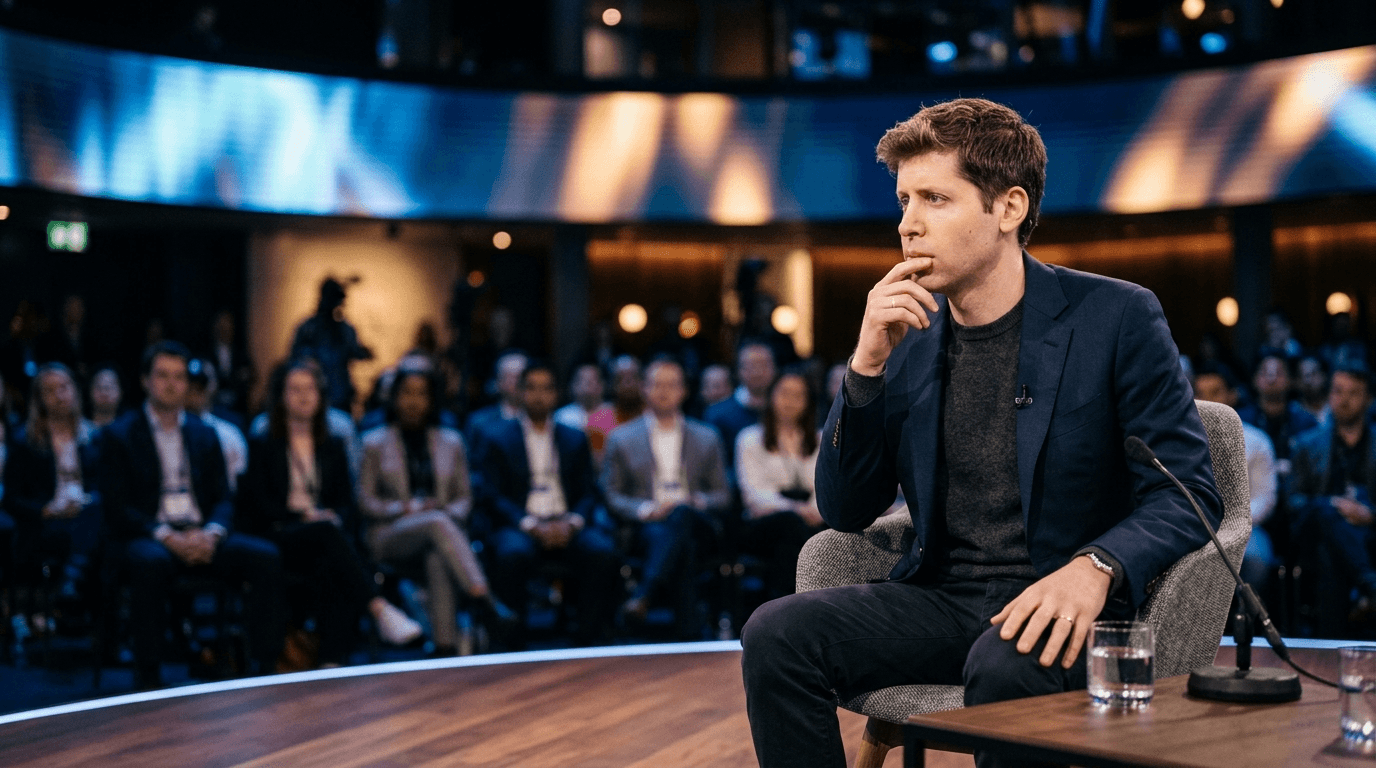
Beyond the Avatar: Why Digital Presence is Moving from "Looking" to "Doing"
Google recently announced a significant evolution for Google Vids, transforming it from a simple workplace presentation tool into an all-in-one AI video creation platform. The headline feature? The ability to create custom digital avatars that look and sound exactly like you, based on a single selfie and a voice recording. Combined with the integration of Gemini Omni, users can now edit videos through conversational prompts, swap backgrounds, and refine lighting—essentially becoming the director and the star of their own corporate content.
At first glance, this feels like a victory for personalized communication. No more spending hours in front of a camera or hiring expensive production crews for a simple company update or training module. But as we step into this era of "hyper-realistic digital twins," we need to ask a critical question: Is looking like the business owner enough to actually run the business?
The Mirage of the Visual Twin
There is a seductive quality to AI avatars. They solve the presentation problem. They ensure that a CEO’s message reaches every employee in ten different languages with perfect lighting and consistent tone. However, there is a fundamental difference between representation (looking like you) andagency (acting as you).
A digital avatar in a video is essentially an advanced form of storytelling. It delivers information in one direction. It is an evolved brochure—visually stunning and personally branded, but static in its interaction. If a customer or employee watches an AI-generated video about a new product and has a specific question about stock availability or technical compatibility, the avatar cannot answer them in real-time. The experience breaks the moment the viewer wants to engage back.
This is where we see the divergence between generative media (like Google Vids) andgenerative agency (like Giizo AI).
From Presentation to Operation: The Rise of Digital Workers
While Google Vids focuses on how your business looks, the next frontier of enterprise AI is about how your businessworks.
The industry is shifting from "Chatbots" to "Digital Workers." A chatbot follows a script; an avatar follows a visual prompt; but a Digital Worker follows an operational goal.
Imagine two scenarios:
- The Avatar Approach: You create an AI video explaining your store's return policy. A customer watches it, understands the policy, but still needs to know if their specific order #12345 is eligible for a return today. They have to leave the video, find your contact page, and wait for an email response.
- The Agent Approach: A customer asks about their return on WhatsApp. A digital worker—powered by RAG (Retrieval-Augmented Generation) and MCP (Model Context Protocol)—doesn't just recite the policy; it connects to your order management system, verifies the purchase date for order #12345, checks if it's within the 30-day window, and generates a return label instantly.
One provides information; the other completes a task. One represents your brand; the other operates your business.
The Convergence: The Ultimate Business Interface
The real magic happens when these two worlds collide. We are moving toward an ecosystem where your digital presence is multi-layered:
- Visual Layer: High-fidelity avatars (like those in Google Vids) handle onboarding, storytelling, and high-level announcements across YouTube or internal portals.
- Operational Layer: Intelligent agents (like Giizo AI) handle 24/7 customer interactions across WhatsApp, Instagram, and Web Widgets—integrating directly with catalogs and APIs to solve problems in real-time.
When you combine these, you no longer have "tools"; you have a Digital Workforce. Your brand becomes available everywhere—not just as something people watch or read about, but as something they can interact with to get things done immediately.
Trust in the Age of Synthesis
Google’s inclusion of SynthID watermarking for its avatars highlights an emerging challenge: trust. As it becomes effortless to synthesize human likenesses, authenticity becomes our most valuable currency.
For businesses, trust isn't built through how realistic an avatar looks; it's built through accuracy and reliability. This is why we emphasize that digital workers must be grounded in real data (the Knowledge Base). An AI that sounds human but gives wrong information destroys trust faster than any deepfake ever could. True trust comes from an agent that says: "I don't have that information in my records yet; let me connect you with my human colleague," rather than one that hallucinates an answer just because it has a friendly face attached to it.
Final Thought: Which Twin Do You Need?
Google Vids is opening doors to incredible creative possibilities for corporate communication_. It allows us to scale our image without scaling our effort_. But as business owners and managers, we must remember that customers don't buy from images—they buy from solutions_.
If your goal is to be seen and heard more efficientlyC’s great_. But if your goal is to serve betterC’ fasterC’ and scale your operations without adding overheadC’ then you don't need another video tool_. You need a digital worker who knows your sectorC’ uses your toolsC’ and does your work_.