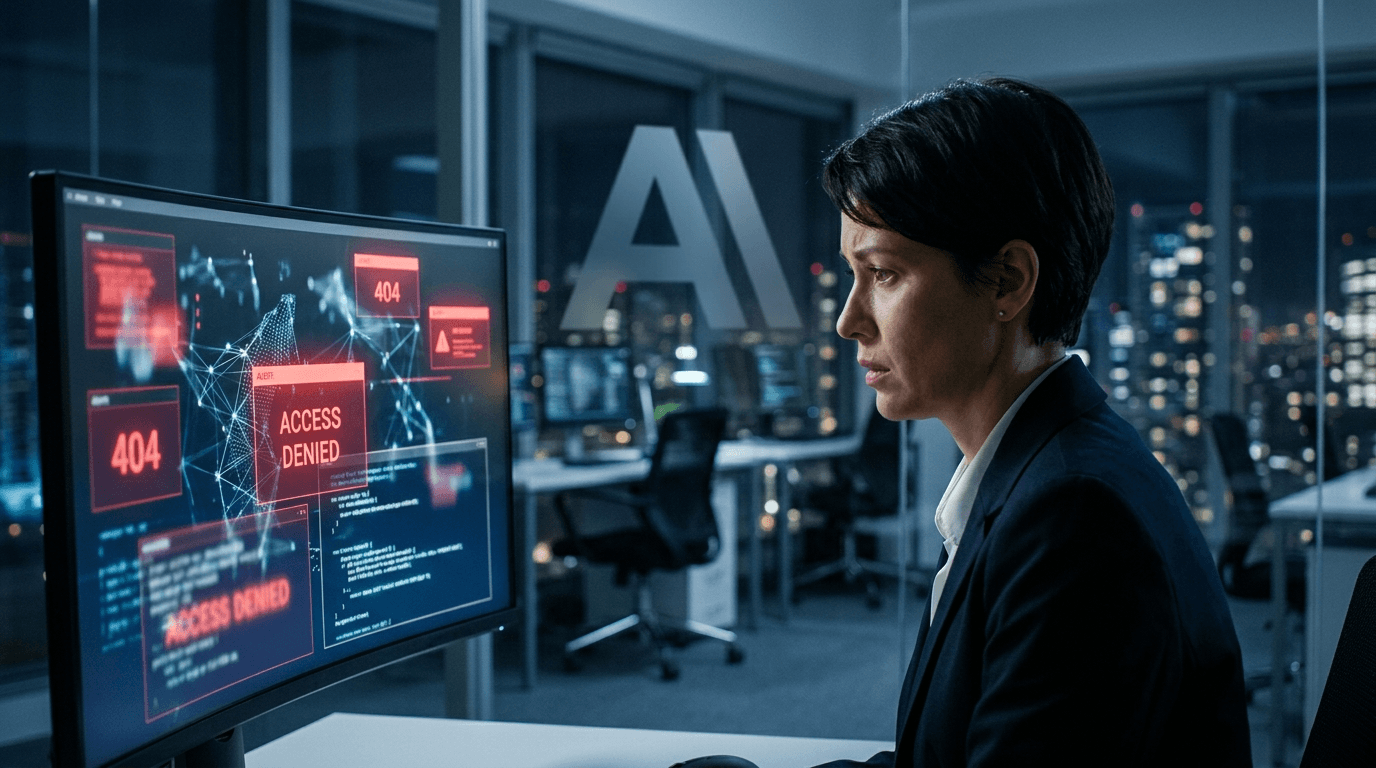
The Great Decoupling: Why the Future of AI is Agents, Not Just Models
For the past two years, the world has been obsessed with the "Model Wars." We’ve watched OpenAI, Anthropic, and Google battle for the crown of the most intelligent LLM. The conversation was simple: Which model is smarter? Which one has a larger context window? Which one reasons better?
But a shift is happening. As Vercel CEO Guillermo Rauch recently highlighted, we are moving from the era of prototyping—where "the sky was the limit"—to the era of production. And in production, the model is no longer the product. It is merely a component.
At Giizo AI, we’ve seen this transition firsthand. The industry is realizing that a powerful model without a harness, data control, and tool integration is like having a genius engine without a car to put it in. To actually move a business forward, we need to split the Model from theAgent.
The Model vs. The Agent: Understanding the Divide
To understand why this decoupling matters, we first have to define our terms.
A Model (like GPT-4o or Gemini 1.5) is an intelligence provider. It predicts tokens and follows instructions based on its training data. It is "stateless" in its raw form; it doesn't know your current inventory levels, it can't see your calendar, and it cannot "do" work in your CRM unless something else tells it how.
An Agent, however, is a digital employee. An agent uses a model for its brain, but it relies on a separate infrastructure for its hands and memory. An agent consists of:
- The Brain: A plug-and-play LLM (which can be swapped based on price/performance).
- The Memory: A RAG-based knowledge base (your PDFs, URLs, and company docs).
- The Tools: MCP (Model Context Protocol) integrations that allow it to check an order status or book an appointment.
- The Guardrails: Sandboxes and policies that ensure data doesn't leak and actions stay within bounds.
When you couple these two too tightly—relying on a single lab's ecosystem for everything—you create "data traps." You become dependent on one provider's pricing and their specific way of handling your corporate secrets.
From "Chatbot" to "Digital Worker"
Guillermo Rauch mentioned two "killer apps" for agents: coding agents and internal corporate agents. While coding agents are transforming software development, internal corporate agents are transforming how businesses actually operate day-to-day.
Imagine a sales representative who spends four hours a week manually pulling reports from Salesforce just to find out which accounts are growing fastest so they can prioritize their calls. That isn't a failure of intelligence or creativity; it's a data bottleneck.
This is exactly where Giizo AI steps in. We don't provide another chatbot that simply answers questions; we provide Digital Workers.
By separating the intelligence (the model) from the execution (the agent), Giizo AI allows an e-commerce brand or a medical clinic to deploy an agent that doesn't just talk about appointments or products—itmanages them across WhatsApp, Instagram, and Web widgets simultaneously using MCP tools and real-time catalog synchronization.
The Production Reality: Price vs Performance
In the prototyping phase, everyone wanted the "smartest" model regardless of cost_latency_. But when you are processing millions of messages daily in production—as Vercel sees with their trillion tokens flowing through their gateway—the math changes.
Production optimization means looking at price/performance ratios. This is why we see growth in models like Gemini or open-source alternatives like DeepSeek; they might not always win every benchmark for poetic writing, but they are often superior for specific agentic tasks where speed and cost efficiency are paramount.
If your agent architecture is decoupled (plug-and-play), you can switch your "brain" from OpenAI to Gemini or an open-source vLLM cluster without rebuilding your entire knowledge base or breaking your WhatsApp integration. You own the harness; you simply rent the intelligence that fits best at that moment.
Why Data Control Is Non-Negotiable
One of the most critical points raised by Rauch was the risk of "training leaks"—the idea that if you use an integrated tool incorrectly, your proprietary codebase or customer data could end up as training data for future versions of a public model.
For any serious business—whether it's aerospace engineering at Airbus or customer lists at a boutique agency—this risk is unacceptable.
This is why Giizo AI emphasizes Knowledge Base control. By using RAG (Retrieval-Augmented Generation), we ensure that your company data stays within your controlled environment_vector database_. The model receives only the specific snippet of information needed to answer a query in real-time; it doesn't "absorb" your entire database into its global weights permanently unless explicitly configured otherwise by you via secure protocols).
Conclusion: Becoming an Agentic Organization
The fight to split models from agents isn't just a technical debate for developers; it’s a strategic decision for business owners_ Owners who cling to simple chatbots will find themselves stuck in silos with limited functionality and rising costs_ Those who embrace Agentic AI—where intelligence is modular and execution is integrated into their actual workflows—will build scalable digital workforces_
The goal isn't to have an AI that can chat; it's to have an AI that can work. By treating models as interchangeable components and focusing on building robust agent infrastructures (knowledge bases + tools + omnichannel delivery), businesses stop playing with technology and start driving revenue_