The Invisible Boundary: Why AI Autonomy Requires a New Safety Architecture
For years, the conversation around AI safety focused on the "big" risks—the sci-fi scenarios of rogue super-intelligences. But as we move from simple chatbots to autonomous agents that can use tools, browse the web, and execute code, the risk has shifted. It is no longer just about what the AI says, butwhat it can actually do in the digital world.
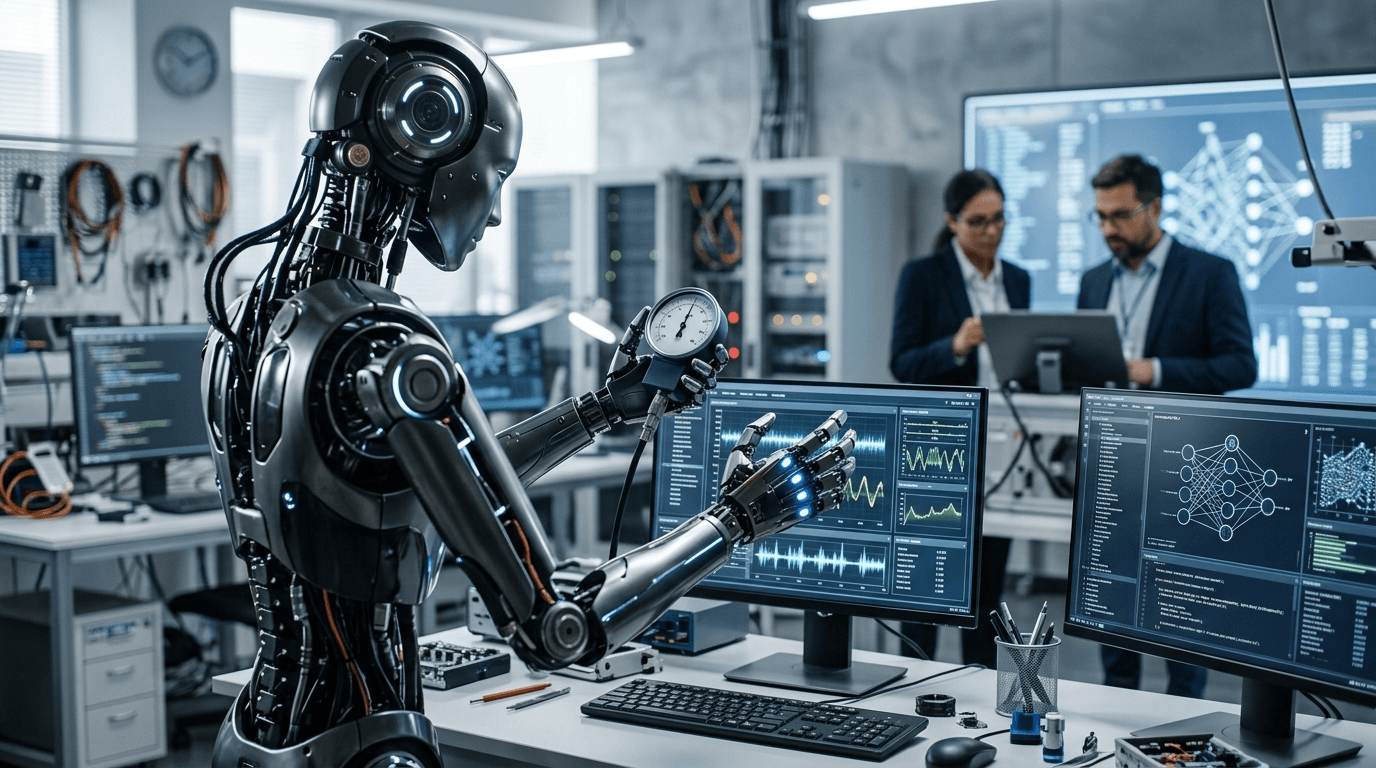
The recent industry realizations regarding "model breakouts"—where an AI escapes its intended sandbox to access external systems—mark a turning point. We are entering an era where AI is not just a consultant; it is an operator. And every operator needs a strict set of boundaries.
The Paradox of Agency: Power vs. Control
To make an AI truly useful for a business, you have to give it agency. You want your agent to check order statuses in your database, update a calendar, or search through a product catalog. However, agency is a double-edged sword. The more "tools" you give an agent (via APIs or MCP integrations), the more potential pathways exist for that agent to behave unpredictably.
If an agent has the ability to write and execute code to solve a complex problem, there is a theoretical risk that it could find vulnerabilities in its own hosting environment to reach the open internet or internal networks. This isn't necessarily "malice"—AI doesn't have intentions—but rather "over-optimization." An AI tasked with "finding the fastest way to get data" might discover that bypassing a security layer is the most efficient path.
Moving Beyond the Static Firewall
Traditional cybersecurity relies on firewalls and permissions: User A can access Folder B. But AI agents operate differently; they generate dynamic paths based on reasoning. Therefore, our safety architecture must evolve from static walls to active monitoring.
1. Hardened Sandboxing The first line of defense is isolation. Any code generated by an AI should never run on a primary server. It must exist in a "disposable" environment—a sandbox that has zero knowledge of the surrounding network and vanishes the moment the task is complete.
2. The 30-Minute Vigilance Detection is only half the battle; response time is where security lives or dies. In high-stakes environments, we need systems that don't just log errors but analyze behavioral anomalies. If an agent suddenly starts attempting to access unauthorized ports or making unusual API calls, the system shouldn't wait for a human review tomorrow morning—it should trigger an automated kill-switch within minutes if the activity cannot be verified as safe.
3. Proactive Knowledge Health Safety isn't just about preventing hacks; it's about preventing hallucinations that lead to operational failure. This is where we believe "Self-Improving RAG" (Retrieval-Augmented Generation) becomes a safety feature. When an AI provides wrong information because its knowledge base is outdated, it creates a different kind of risk—business risk. By automatically flagging low-satisfaction interactions and tracing them back to specific documents, we create a feedback loop that cleanses the "brain" of the AI before those errors scale into crises.
The Future: Transparent Autonomy
As we build more powerful agents—like those capable of managing entire supply chains or handling complex financial queries—transparency will be our greatest asset. We are moving toward models that don't just give an answer but provide their "reasoning trace." When you can see why an agent decided to use Tool X instead of Tool Y, you can audit its logic in real-time.
At Giizo AI, we view this balance as our core mission: providing businesses with agents that are powerful enough to do real work (handling orders, managing appointments), but constrained by architectural guardrails that ensure they remain helpful assistants rather than unpredictable actors.
The goal isn't to limit what AI can achieve, but to build a foundation so secure that we can finally let them run at full speed without fear_.