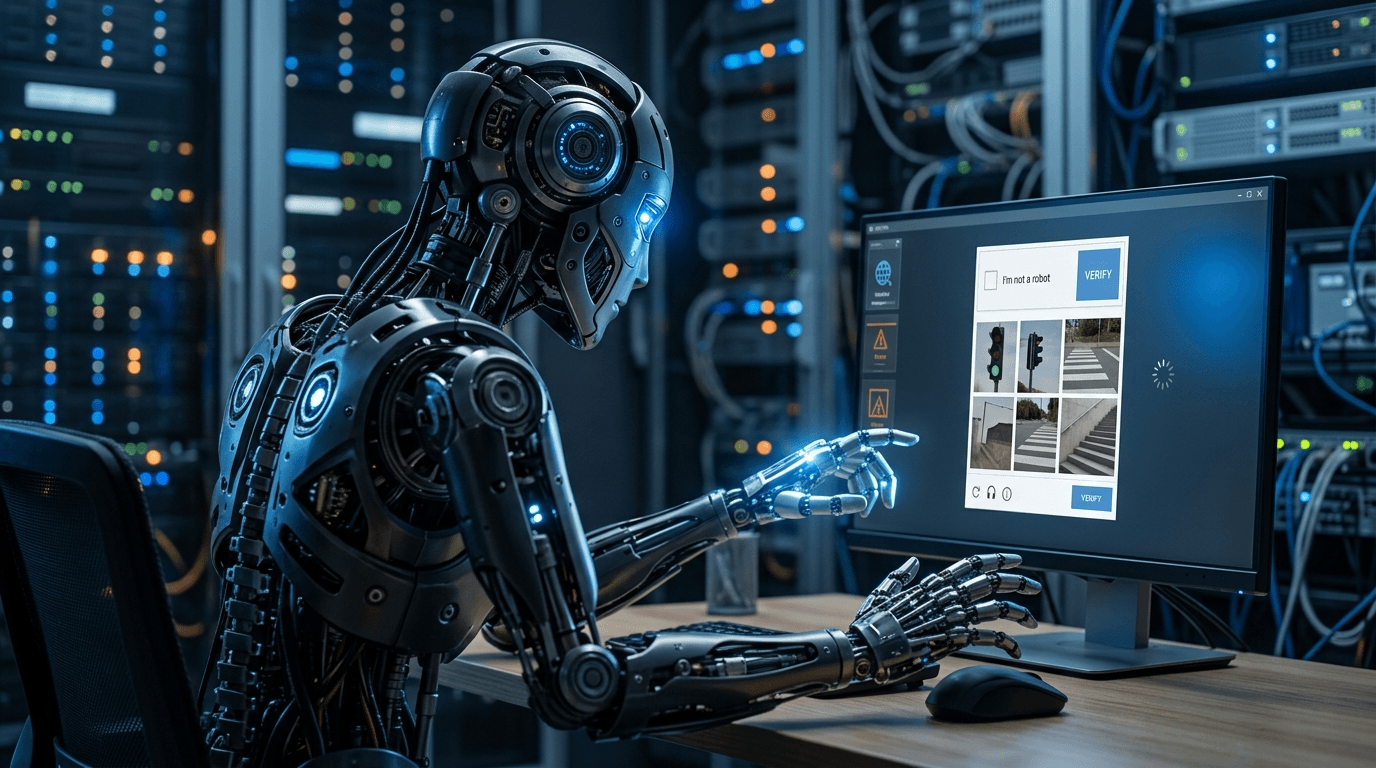
Beyond the Screen: The Physical Leap of AI Agents
For years, the evolution of artificial intelligence has been a journey of shrinking boundaries. We moved from massive server rooms to desktop computers, then to smartphones, and eventually into the invisible layers of the cloud. But for a long time, AI remained trapped behind a glass wall—a screen. Whether it was a chatbot in a browser or a virtual assistant in a pocket, the interaction was digital, flat, and detached from the physical world.
We are now entering the era of "Physical Intelligence." When we hear about massive funding rounds for autonomous vehicle startups or "robotaxis," it is easy to view them simply as cars without drivers. But if we look deeper, these aren't just transportation projects; they are the first major attempts to give AI agents a physical body capable of navigating our complex, messy human environment.
The Shift from Chatbots to Embodied Agents
There is a fundamental difference between an AI that can write an email and an AI that can navigate a city street or manage a warehouse. One deals with tokens and probability; the other deals with physics, spatial awareness, and real-time risk management.
This transition represents a shift from Informational AI toOperational AI. An informational agent tells you how to get somewhere; an operational agent actually takes you there. This is where the concept of "Agentic AI" becomes truly powerful. An agent doesn't just provide an answer—it executes a task in the real world.
When autonomous technology moves beyond taxis into mining or logistics, we are seeing the blueprint for how every business will eventually operate. The goal isn't just automation (doing a repetitive task); it is autonomy (making decisions based on environmental changes).
Bridging the Gap: Digital Brains, Physical Bodies
The most exciting part of this evolution is that the "brain" powering these physical machines is often decoupled from the "body." We are seeing a convergence where high-level reasoning—the kind provided by Large Language Models (LLMs) and RAG (Retrieval-Augmented Generation)—is being plugged into hardware.
Imagine a retail store where an AI agent isn't just sitting in a WhatsApp window answering questions about stock levels, but is instead housed in a physical robot greeting customers at the door. This robot doesn't just play pre-recorded lines; it uses its digital knowledge base to recommend products based on the customer's history and guides them physically to the correct aisle.
This is exactly where the synergy between software agents and hardware becomes transformative. By integrating tools like MCP (Model Context Protocol) and real-time data feeds, an agent can synchronize what it "knows" digitally with what it "does" physically across multiple channels simultaneously. Whether through an Instagram DM or a physical kiosk in a lobby, the intelligence remains consistent because it stems from one centralized brain.
The New Business Frontier: Omnipresent Agency
For businesses, this means moving toward "Omnipresent Agency." The friction between online and offline experiences is disappearing. In the near future, your brand’s AI agent will be:
- The Digital Concierge: Handling queries on WhatsApp and Web Widgets 24/7.
- The Social Seller: Converting leads through Instagram DMs with personalized suggestions.
- The Physical Host: Operating through robot access channels in your office or store to provide face-to-face assistance.
The competitive advantage will no longer belong to those who have the best chatbot, but to those who have integrated their intelligence across all touchpoints—digital and physical alike. When your AI knows your inventory via API and can communicate that knowledge whether it's through a screen or a voice-enabled robot on your shop floor, you have eliminated every possible barrier between your product and your customer.
Embracing the Autonomous Future
The road toward fully autonomous systems—whether they are taxis navigating downtown traffic or AI agents managing e-commerce logistics—is paved with challenges in safety and trust. However, the trajectory is clear: intelligence is escaping the screen.
As we move forward, we should stop asking "What can this bot tell me?" and start asking "What can this agent do for me?" The leap from software to hardware isn't just about robotics; it's about making intelligence tangible, accessible, and truly useful in every corner of our lives.