Beyond the Screen: Why the Race for "Physical AI" is the Next Frontier for Business
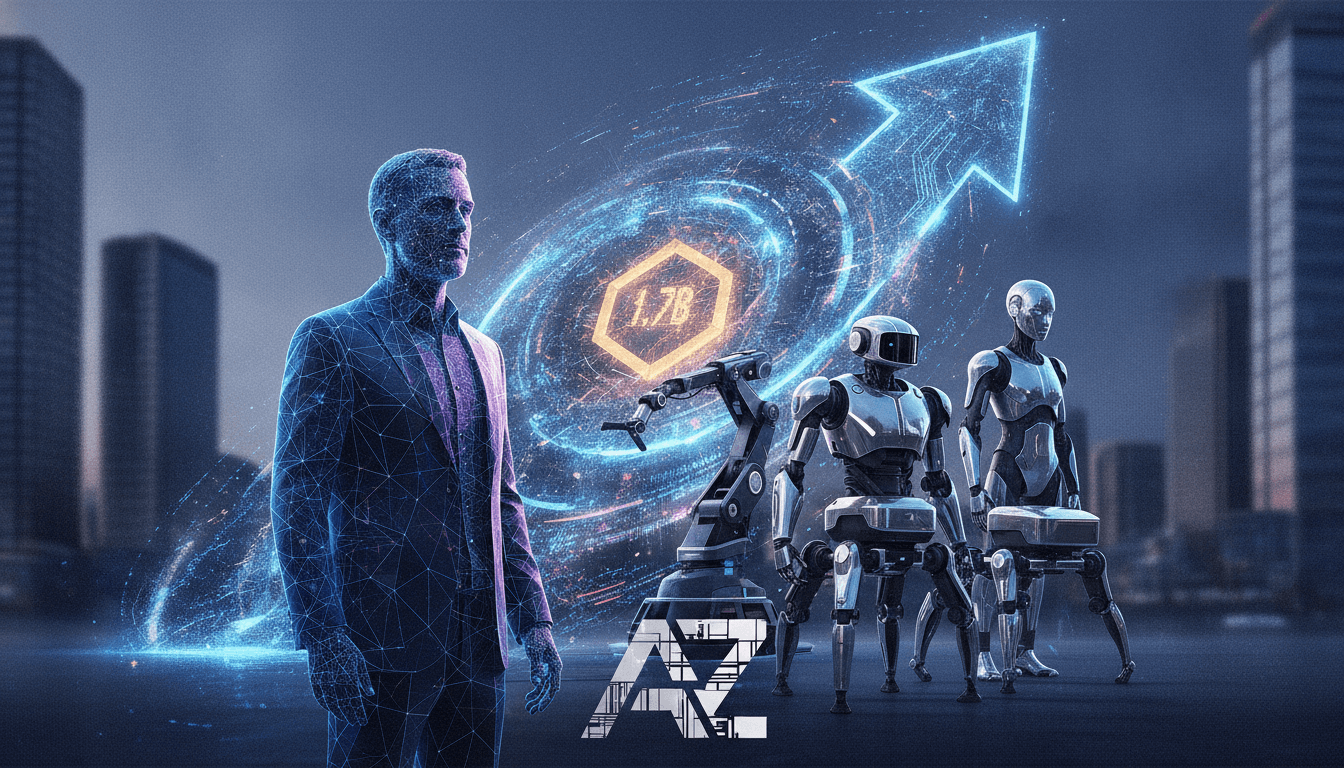
The AI world is currently buzzing with rumors of a high-stakes acquisition. Reports suggest that Anthropic, the creator of Claude, has been in talks to acquire Physical Intelligence, a robotics startup valued in the billions. While CEOs might deny it with GIFs or strategic silence, the underlying signal is loud and clear: The giants of Large Language Models (LLMs) are desperate to get their "brains" into physical bodies.
But why now? Why is a company that excels at writing poetry and coding software suddenly obsessed with robotics?
For those of us observing from the perspective of business automation and agentic AI, this isn't just about building a better humanoid robot. It’s about a fundamental shift in how intelligence is defined and deployed.
The "Internet Text" Ceiling
For years, AI has been trained on the internet—a massive library of human thought captured in text. This allowed models to become incredibly articulate and knowledgeable. However, there is a ceiling to what you can learn from reading.
You can read a thousand manuals on how to fold a shirt or manage a warehouse, but you don't understand gravity, friction, or spatial awareness until you interact with them. This is what industry insiders call "embodiment." The theory is simple: true superintelligence requires an understanding of the physical world. Without it, an AI is just a very sophisticated librarian; with it, it becomes an actor.
From Chatbots to Agents: The Evolution of "Doing"
At Giizo AI, we have always operated on a similar philosophy: A chatbot that only talks is an incomplete tool.
The transition from "Chatbot" $\rightarrow$ "Agent" $\rightarrow$ "Physical Agent" follows a logical progression of capability:
- Chatbots: Answer questions based on data (Information).
- Agents: Use tools (APIs, CRMs) to execute tasks like booking an appointment or checking an order status (Action).
- Physical Agents: Interact with the tangible world—moving objects, managing inventory physically, or greeting customers in a lobby (Embodiment).
When Anthropic looks at Physical Intelligence, they aren't just buying code; they are buying the ability to bridge the gap between thinking anddoing. They want their models to move beyond the browser tab and into the real world.
What This Means for Your Business
You might think, "I don't run a robotics lab; why does this matter to me?"
It matters because this trend accelerates the arrival of Digital Employees. Whether an agent lives in a cloud server communicating via WhatsApp or resides in a physical robot in your store, the core logic remains the same:Specialized Knowledge + Tool Access = Value.
Imagine a future where your business operations are handled by a unified intelligence layer:
- On WhatsApp: Your Giizo AI agent handles lead generation and qualifies customers using your Smart Catalog.
- In your Backend: It uses MCP (Model Context Protocol) tools to update your CRM and trigger shipping labels automatically.
- In your Physical Store: A robotic interface (powered by that same intelligence) greets your customer by name because it knows they just chatted with your agent on Instagram ten minutes ago.
This is no longer science fiction; it is the roadmap being drawn by companies like OpenAI and Anthropic today.
The Bridge: How We Get There Today
We don't need to wait for billion-dollar acquisitions or humanoid robots to start this transformation. The infrastructure for "embodied" business intelligence already exists in pieces:
- RAG-based Knowledge: Giving AI access to your specific business documents so it doesn't hallucinate.
- Tool Integration: Allowing AI to actually do work via API integrations rather than just suggesting how it should be done.
- Omnichannel Presence: Ensuring that whether the customer is on a web widget or interacting with a physical kiosk/robot terminal, the experience is seamless.
At Giizo AI, we’ve already implemented these layers through our Robot Access Channels and MCP toolsets. We believe that an agent’s value isn't measured by how many words it generates per second, but by how many business processes it completes without human intervention.
Final Thought: The End of "Software Only" Thinking
The rumor mill regarding Anthropic and Physical Intelligence tells us that the era of "software-only" AI is ending. We are entering the era of Integrated Intelligence.
For business owners, the lesson is clear: stop looking for "bots" that can chat with your customers and start looking for "digital employees" that can operate your business tools—and eventually, perhaps your physical spaces—with precision and autonomy.
The brain is almost ready; now it's just looking for its body.