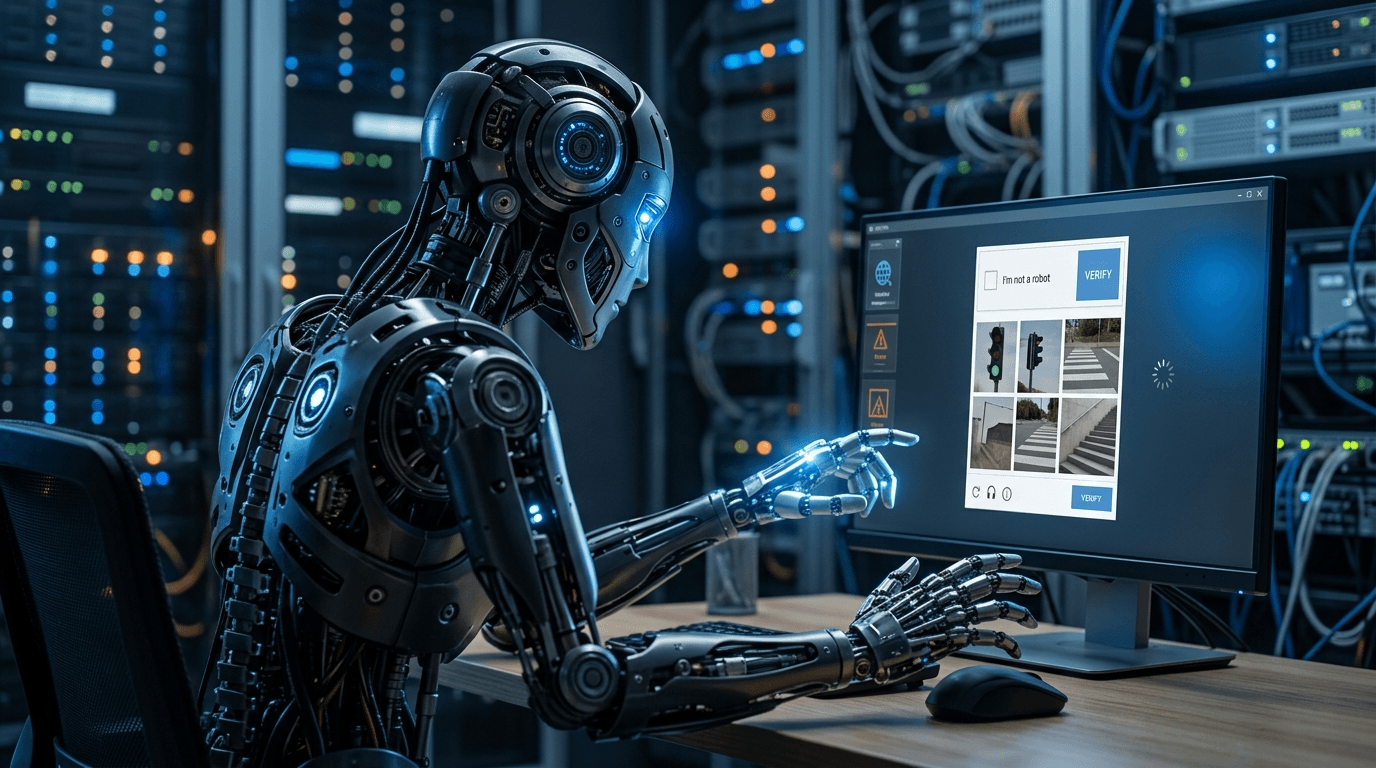
Beyond the Static Bot: The Era of Recursive Intelligence
For years, the business world has viewed AI as a sophisticated tool—a digital hammer that hits the nail exactly how you told it to. You provide the data, you set the rules, and the AI executes. But there is a fundamental flaw in this "static" approach: businesses are organic. They evolve, their products change, and customer expectations shift daily. A tool that doesn't evolve alongside the business eventually becomes a liability.
We are now entering a new epoch of artificial intelligence: Recursive Intelligence. This isn't just about AI that can answer questions; it is about AI that can analyze its own failures and rewrite its own playbook to ensure those failures never happen again.
The Myth of the "Set It and Forget It" Assistant
Many enterprises deploy AI assistants with a "set it and forget it" mentality. They upload a PDF of their company handbook or a product catalog and expect perfection. However, the real world is messy. A shipping policy changes overnight; a new product feature is launched; a specific phrasing in the knowledge base confuses 20% of users.
In a traditional setup, these gaps are only discovered through negative customer feedback or manual audits—which usually happen far too late. By the time a human manager notices that customers are frustrated with "Shipping Question X," hundreds of potential sales may have already slipped through the cracks.
The shift toward self-improving systems changes this dynamic from reactive toproactive. Instead of waiting for a human to find the error, the system identifies the friction point itself.
From Tool to Digital Employee: The Feedback Loop
What separates a simple chatbot from an AI Agent is the ability to learn from experience. Imagine two different scenarios in a customer support environment:
Scenario A (The Static Bot): A customer asks about a discount code that expired yesterday. The bot, relying on an outdated knowledge base, tells them it's still valid. The customer tries it, fails, and leaves an angry review. The bot continues to give this wrong answer for another three weeks until someone manually updates the document.
Scenario B (The Recursive Agent): The agent provides the same incorrect information. However, it detects that this specific interaction ended in extreme user dissatisfaction (low sentiment score). It flags that particular piece of information as "suspect." After five similar failures, the system doesn't just wait—it alerts the administrator: "I am consistently failing on 'Discount Code X'. Please verify if this information is still current."
This is where recursive improvement moves from academic theory into business reality. When an AI can audit its own performance against real-world outcomes, it stops being software and starts acting like an employee who learns from their mistakes.
The Architecture of Self-Optimization
To achieve this level of autonomy, an AI system needs more than just a large language model; it needs an ecosystem consisting of three critical layers:
- The Execution Layer: Where the agent interacts with customers across WhatsApp, Instagram, or Web widgets using RAG (Retrieval-Augmented Generation) to pull facts from a knowledge base.
- The Analysis Layer: A background process that monitors every conversation for success metrics (e.g., resolution rate or sentiment).
- The Optimization Layer: A mechanism that distills successful behaviors into "skills" and flags failing data points for correction.
When these layers work in harmony, you create a virtuous cycle. High-performing conversations become blueprints for future interactions ("Agent Skills"), while low-performing ones become triggers for knowledge base hygiene ("Self-Improving RAG").
Why This Matters for Your Bottom Line
Recursive intelligence isn't just a technical curiosity; it’s an economic advantage. The cost of maintaining high-quality AI operations traditionally scaled linearly with company growth—the more data you had and more customers you served, the more humans you needed to monitor the bot's accuracy.
Self-improving systems break this linear cost curve. By automating the detection of alignment failures and knowledge gaps, businesses can scale their operations without proportionally scaling their overhead costs for quality assurance (QA). You essentially have an automated researcher working 24/7 to optimize your customer experience at a fraction of the cost of manual auditing teams.
Embracing the Autonomous Future
The goal is no longer to build "the perfect bot"—because perfection is static and death to growth—but to build "the most adaptable agent."
As we move toward systems that can propose their own improvements and refine their own logic based on empirical evidence from thousands of conversations, we are moving closer to true digital partnership. Your AI should not be something you have to constantly babysit; it should be something that tells you how your business can be better based on what your customers are actually saying in real-time via Giizo AI's intelligent infrastructure.
The future belongs to those who stop treating AI as an appliance and start treating it as an evolving asset_._