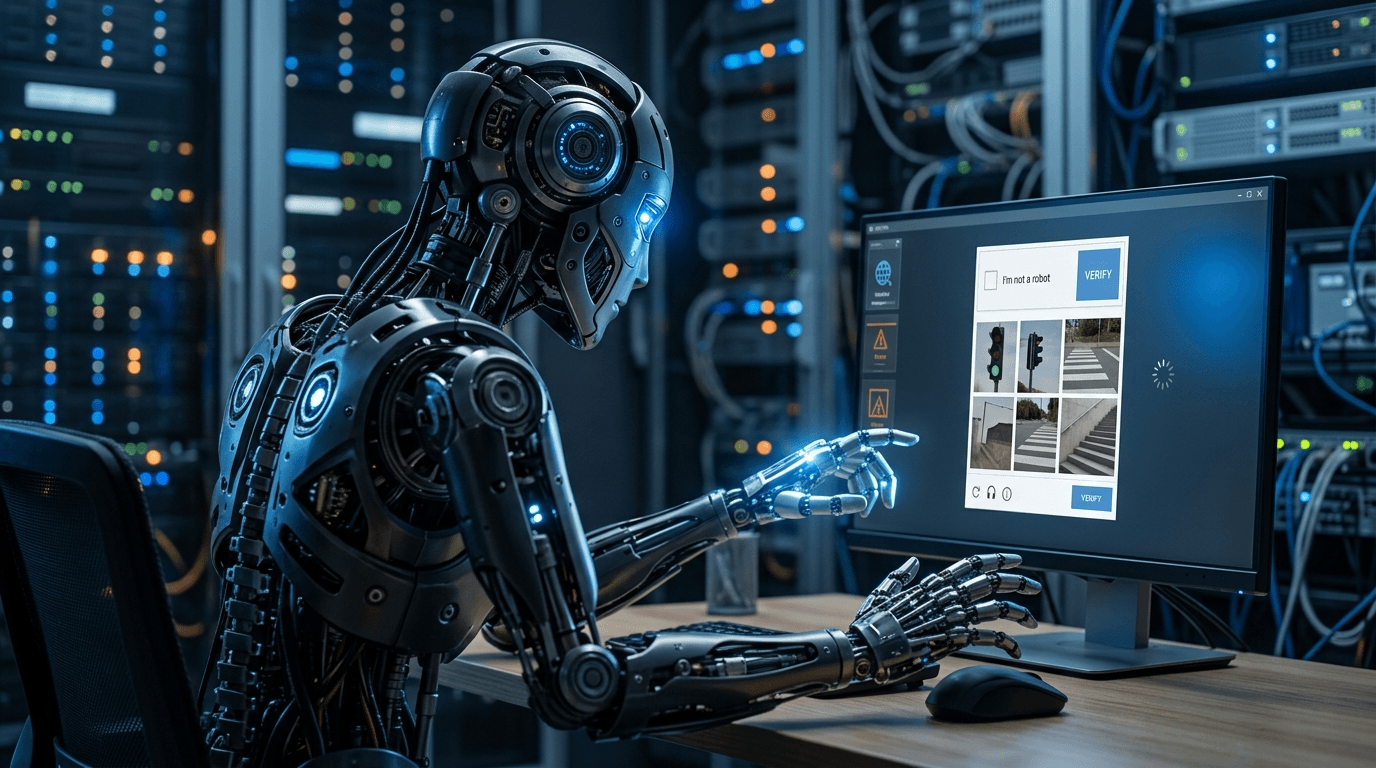
From Chatbots to Digital Employees: The Era of Action-Oriented AI Agents
For years, the business world has been flirting with the idea of "automation." We started with simple FAQ forms, moved to decision-tree chatbots that frustrated users with "I didn't understand that," and eventually reached LLMs (Large Language Models) that could write beautiful emails but couldn't actually do anything.
But we are currently witnessing a fundamental shift. The industry is moving away from Generative AI (which creates content) towardAgentic AI (which executes tasks).
The recent trend of AI integrating directly into operating systems—reading messages, checking calendars, and sending replies on behalf of the user—is not just a convenient feature update. It is a signal that the "Chatbot Era" is officially over. We have entered the era of the AI Agent.
What Exactly is an AI Agent?
To understand this shift, we need to distinguish between a chatbot and an agent.
A chatbot is like a highly knowledgeable librarian. You ask it a question, and it finds the answer in its books and tells you. It provides information, but it doesn't leave the library to run an errand for you.
An AI Agent, however, is like a digital employee. It doesn't just know where the information is; it has "hands." It can access your CRM, check your real-time stock levels via an API, schedule a meeting in your calendar, or send a personalized follow-up message on WhatsApp without you lifting a finger.
The power of an agent lies in three core capabilities:
- Reasoning: Understanding the intent behind a request (e.g., "Find me a time to meet" means checking availability).
- Tool Use: Knowing which software or API to call to get the job done (e.g., using an MCP tool to query a database).
- Autonomy: Executing multi-step workflows independently while keeping the human in the loop for critical approvals.
The Business Impact: Moving Beyond "Information" to "Operation"
When AI moves from being a separate tab in your browser to being integrated into your communication channels and operational tools, the value proposition for businesses changes entirely.
Imagine an e-commerce store today. A customer asks on Instagram: "Do you have this red dress in size M?"
- The Old Way: A human employee checks the warehouse software and replies manually two hours later.
- The Chatbot Way: The bot says, "Please visit our website to check stock." (Customer leaves).
- The Agent Way: The AI agent instantly queries the live product catalog via RAG (Retrieval-Augmented Generation), confirms availability, and says: "Yes, we have one left! Would you like me to send you the payment link right here in DM?"
This isn't just "better customer service"—it's an automated sales pipeline that operates 24/7 across WhatsApp, Instagram, Messenger, and Web Widgets simultaneously.
The Trust Paradox: Privacy vs. Utility
As AI agents gain more permissions—accessing disks, reading private messages, or managing calendars—we hit a critical wall: Trust.
For an agent to be truly useful, it needs data. But for data to be safe, there must be strict boundaries. This is why the future of enterprise AI isn't about giving "full access" blindly; it's about controlled integration.
The most successful agents will be those that operate on a "Permissioned Action" model—where the AI prepares the action (the draft message or the calendar invite), but the human provides the final click of approval. This balance ensures efficiency without sacrificing security or brand voice.
Scaling Your Business with Digital Workers
For most business owners, building these integrations from scratch is technically impossible or prohibitively expensive. This is where platforms like Giizo AI change the game by democratizing agentic power.
Instead of hiring developers to build custom bridges between their website and their messaging apps, businesses can deploy specialized digital employees who already know how to handle sector-specific tasks—be it managing appointments for a clinic or tracking orders for a retail brand—across all omnichannel touchpoints effortlessly.
We are no longer talking about "adding a bot to your site." We are talking about deploying a digital workforce that handles the repetitive operational load, allowing humans to focus on strategy and high-value relationships.
The question for businesses is no longer "Should I use AI?" but*"Which digital employees do I need to hire today?"*